Anesthesia Atlas
-
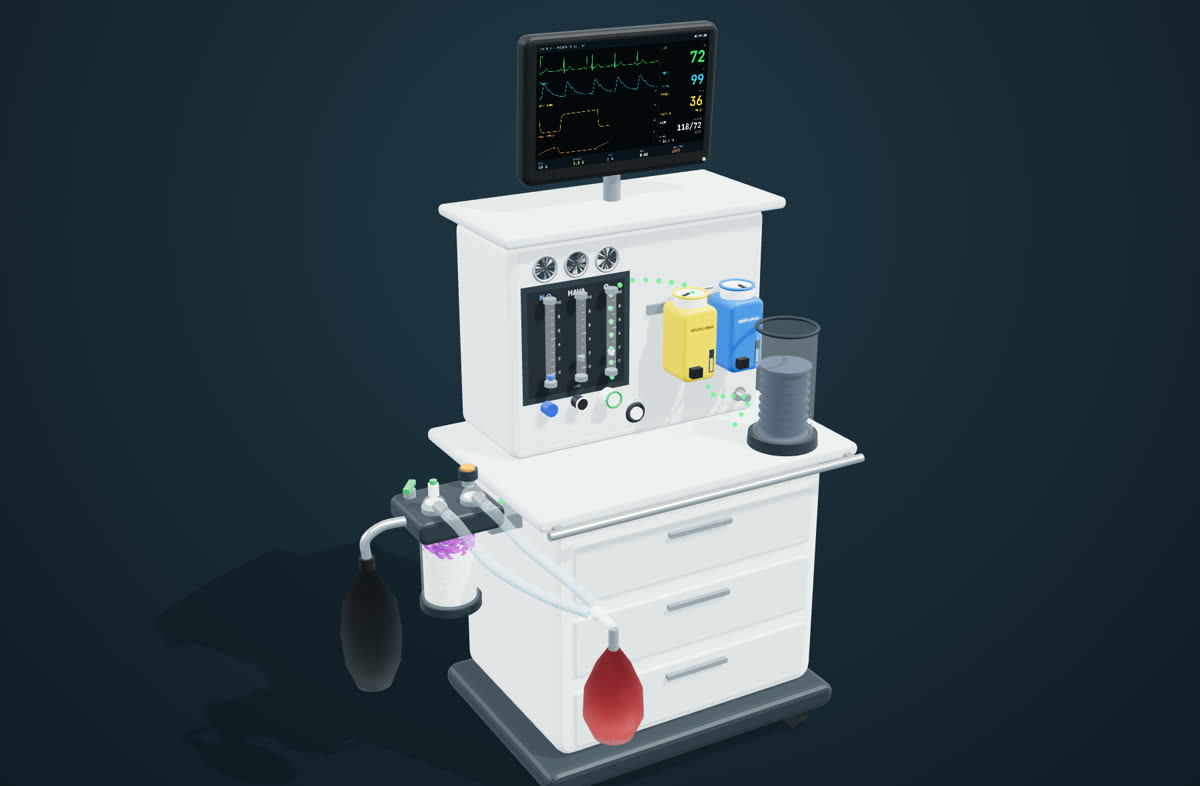
Anaesthesia Machine Atlas
Explore an anaesthesia workstation part by part: the path gas takes from the wall outlet to the alveolus, the physical laws that govern it, the bellows ventilator and the patient monitor.
- 18 parts
- 10 laws of physics
- 8 equipment models
- 4 cases
-
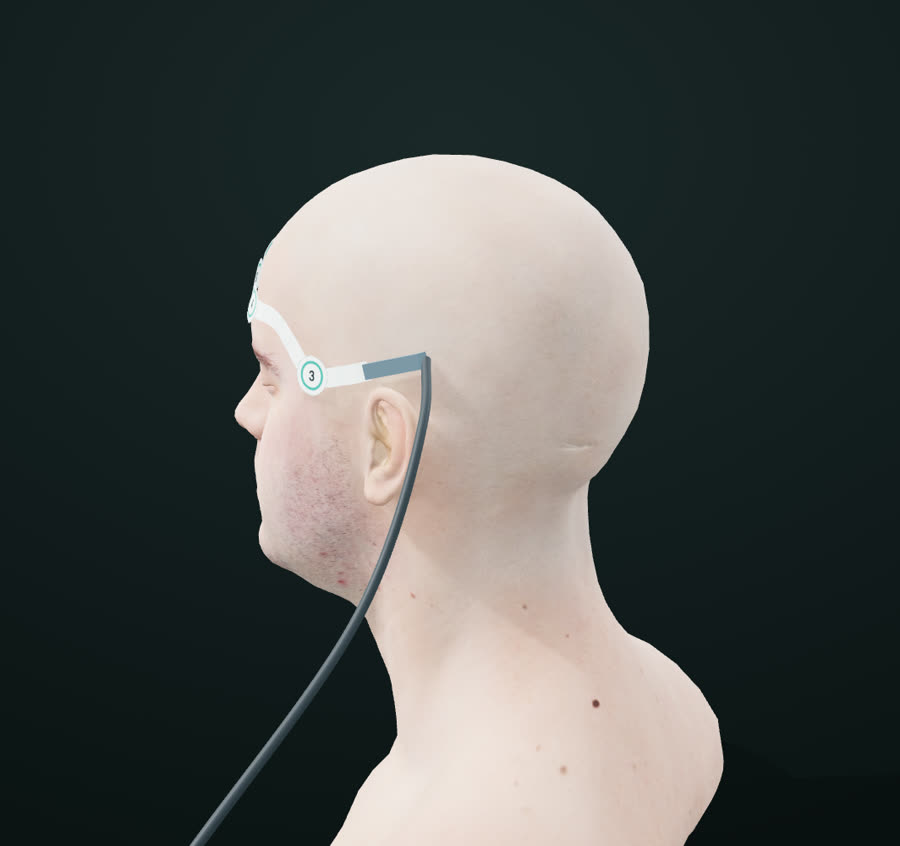
Advanced Monitoring Atlas
From depth-of-anaesthesia and nociception monitors to advanced haemodynamics, neuromuscular monitoring and NIRS: how each device works, how it is applied to the patient and how to interpret its data.
- BIS depth
- NIRS cerebral oximetry
- TOF neuromuscular
- CO haemodynamics
-
Mechanical Ventilation Atlas
From volume- and pressure-controlled modes to support modes: see step by step how each mode works on live pressure, flow and volume waveforms.
- VC volume control
- PC pressure control
- PS pressure support
- SIMV synchronized
-
Blood Gas Atlas
Read a blood gas step by step, starting from the sample: consistency, pH direction, possible processes, compensation, anion gap and oxygenation. In adults, children, newborns and pregnancy, each step with its reasoning and source.
- pH acidaemia · alkalaemia
- HCO₃ compensation
- AG anion gap
- PF oxygenation
-
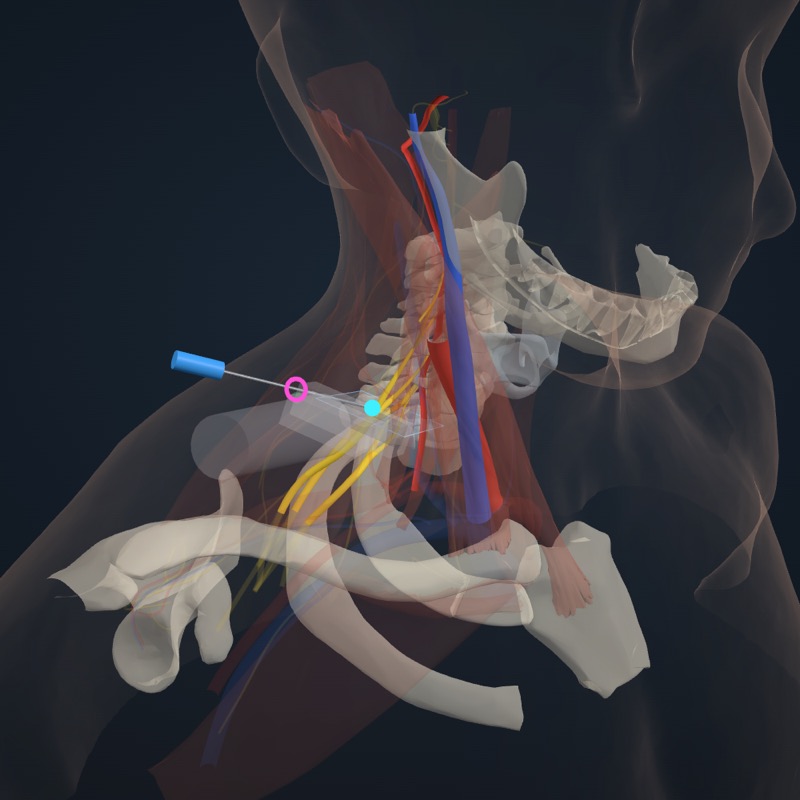
Nerve Block Atlas
18 ultrasound-guided peripheral nerve and fascial plane blocks on real anatomical data: relevant anatomy, sono-anatomy, probe placement, needle path and local anaesthetic spread, also in mixed reality on Meta Quest 3. English edition in preparation.
- 18 blocks
- 8 body regions
- 6 steps
- AR Quest 3
-
EDAIC Preparation Atlas
Preparing for the European Diploma in Anaesthesiology and Intensive Care: how Part I and Part II work and are marked, and how to prepare following the official ESAIC guide. Lessons start with physiology. English edition in preparation.
- Part I written
- Part II oral
- MTF 2 × 60
- SOE 4 × 25 min